

The Powell Site: Evidence of a 16th-Century Spanish/Native Contact Site in Southwest Alabama
by: Caleb Curren
2025
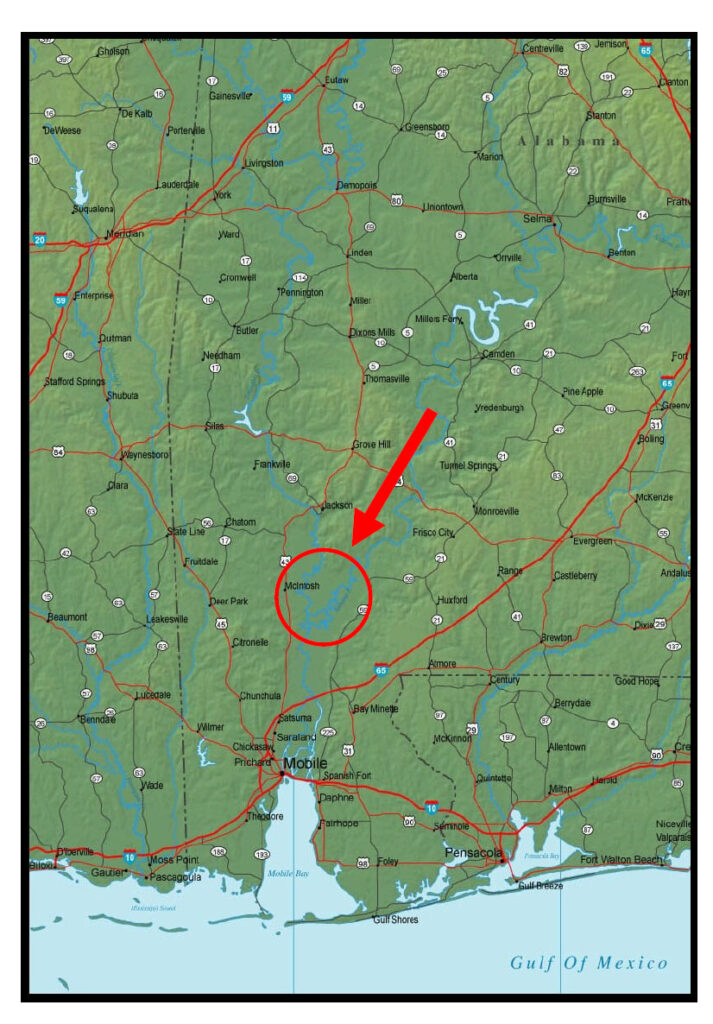
The Discovery of the Powell Site
For decades the late John T. Powell acted as a liaison between professional archeologists and metal detecting groups. In the early days of the 1970s, 80s, and 90s archeologists and metal detectorists did not have a great rapport. One group thought the other group was haphazardly destroying archeological sites. The other group thought that archeologists were trying to confiscate their “finds.” After years of animosity, the two groups have begun to better cooperate with each other on many archeological projects. Some residual frictions still exist and there is room to grow but all in all the relationships are much improved.
John T. Powell had much to do with that peace making progress through his gift of gab and his passion for understanding the past. During his career John was associated with a community college in Brewton, Alabama and later in his life with the St. Augustine Fountain of Youth Park in Florida. His diplomatic talents led to the discovery of what has become known as the “Powell Site,” the main subject of this article.
John was acutely aware of my research interests in early contacts between the Spanish and the Native peoples of the current southeastern United States. Consequently, we had many communications over decades concerning the stories of new discoveries from the metal detectorists community in the northern Mobile Delta region of the lower reaches of the Alabama and Tombigbee Rivers.
During a conference of metal detecting groups held in Mobile, Alabama, two men sought him out for advice concerning the identification of Spanish and Native artifacts that they had found at the “Powell Site.” They also wanted John to teach them his knowledge on the preservation of historic metal artifacts. John, in exchange for information about the site, shared some of his knowledge. Unfortunately, the men would not allow John to photograph the artifacts. He made notes of descriptions of the artifacts which he later relayed to me in detail. From these descriptions, he and I both agreed that the artifacts were very likely Spanish in origin and dated to the 1500s. We tried for decades to find the two men, who were offshore oil workers, to no avail. Consequently, we offer in this article, the most we know of this important site.
The men were secretive about the location of the site but did reveal some clues as to its location. The site was on an island that the Alabama River had cut off and created. It was accessible only by boat and was on the west side of the Alabama River which was near sites containing other Spanish and Native artifacts from the 1500s.
The following artifacts were from the site in question. Some were found with metal detectors and some from water erosion. Screens were not used during their digging. The midden at the site was reported to be buried beneath 6 inches of hard packed, culturally sterile sediment which we had also found in our excavations at other sites nearby to be typical of the region. John managed to obtain the collectors’ names but the papers with their names and notes were later unfortunately lost when a custodian at the college in Brewton disposed of them while cleaning John’s office, leaving us with an unsolved mystery as to their identities.

John T. Powell
The Artifacts from the Powell Site
- Silver coins (2), cross on one face, drilled for a necklace, presumably by local Natives.
- Gold coin (1), (not brought to the conference).
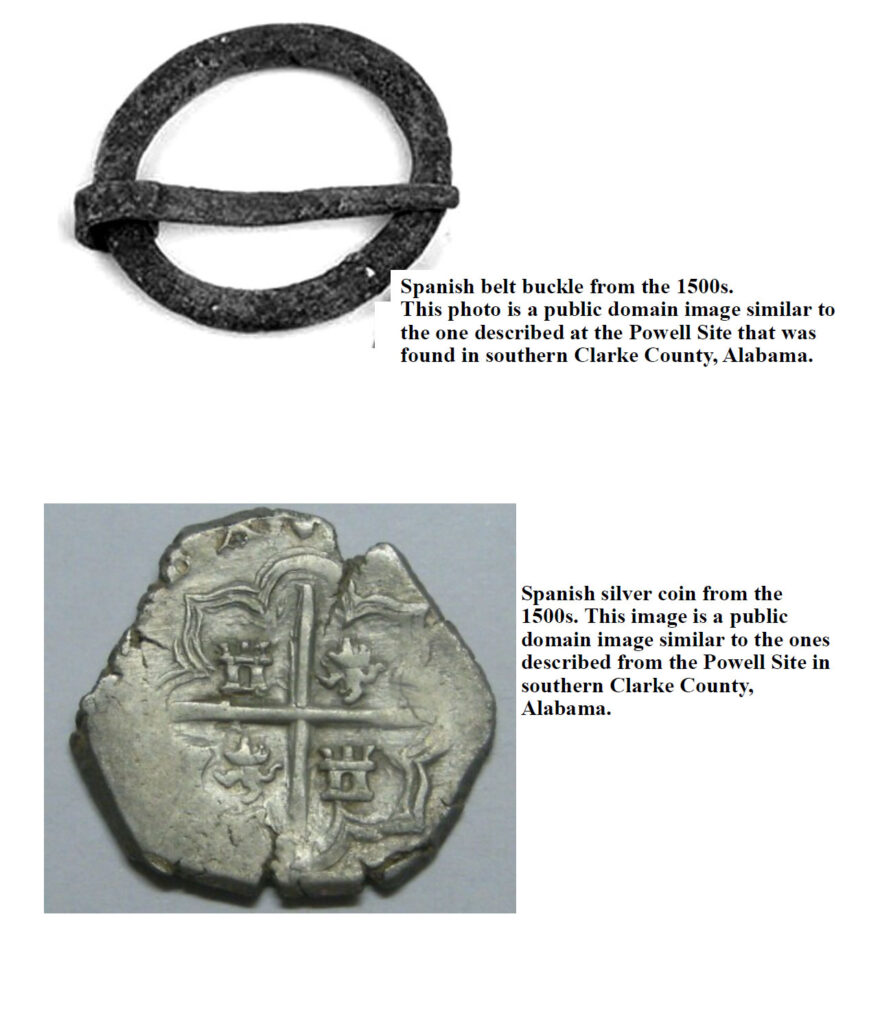
- Large iron buckle (1), circular with single bar across the diameter.
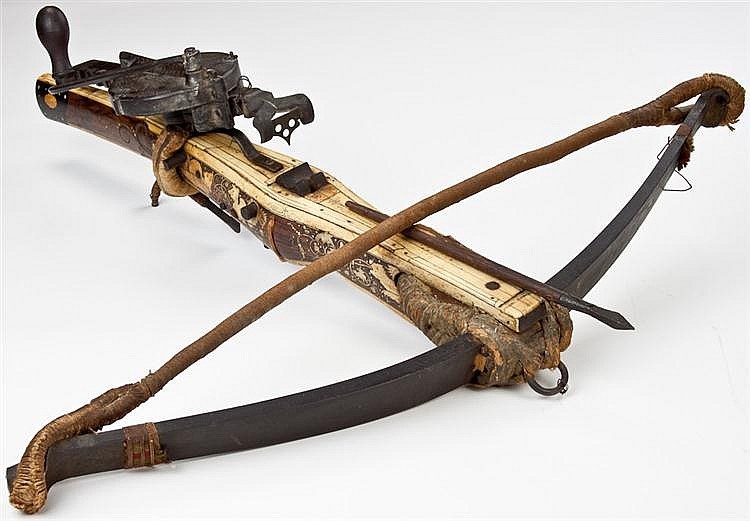
- Dense iron crossbow projectile point (2).
- Steel sword with basket helt (1), with flute on both sides of double blade, buried vertically.
- Iron musket balls (2), match lock gun?
- Spanish majolica ceramic sherds (several).
- Ornate metal thimble (1).
- European glass beads (6), one round blue, five oblong, some with several layers of colors.
- Iron fragments of matchlock gun (several).
- Iron hammer (1), small, cobbler or blacksmith tool?
- Steel dagger (1), good condition, found buried in Native ceramic vessel.
- Native ceramic sherds and gamestones (numerous).
The following pages of illustrations provide the reader with public domain examples of artifacts similar to those described by John T. Powell from the Powell Site. They are not the specific artifacts seen by Powell due to the fact that the collectors would not allow photos to be taken. Granted that it would be better if we had
detailed photos and a map of the location of the site but, at least, John provided us with some very compelling data.
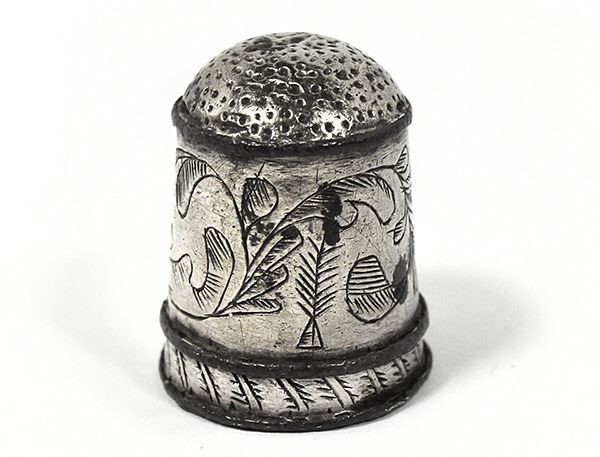
The history of ornate Spanish thimbles in the 1500s reflects Spain’s immense wealth, technological advances, and global expansion during the Renaissance and Golden Age. While thimbles were fundamentally utilitarian, the most intricate examples were made from precious metals for the wealthy and served as gifts and status symbols (public domain, AI source).
The figure on the left is but one example of many ornate thimbles from the time of the Luna and Soto Expeditions. While the illustration is not the specific “very ornate thimble” described from the Powell Site, it is an example of a Spanish thimble from the time period.
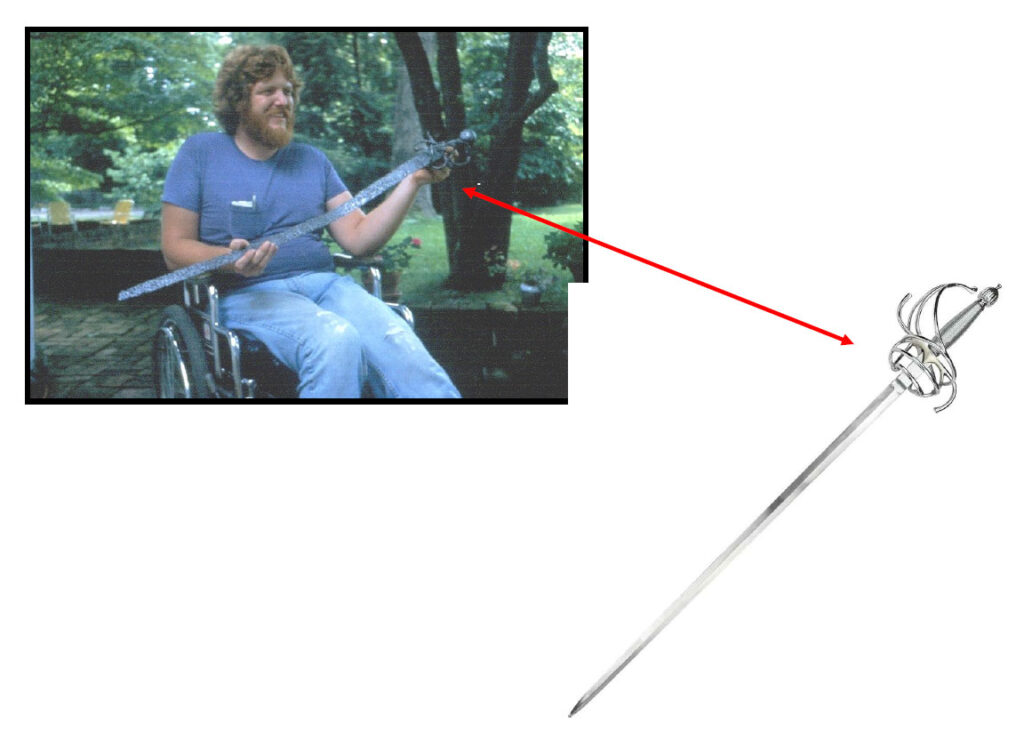
Dr. Keith Little holding a Spanish basket hilt sword from the 1500s found in a plowed field in northeast Alabama, likely from the Coosa Chiefdom.
The basket-hilted sword is a sword type … originating in the mid-16th century, characterized by a basket-shaped guard that protects the hand.
It is similar to the description of the sword found at the Powell Site in southern Clarke County, Alabama.
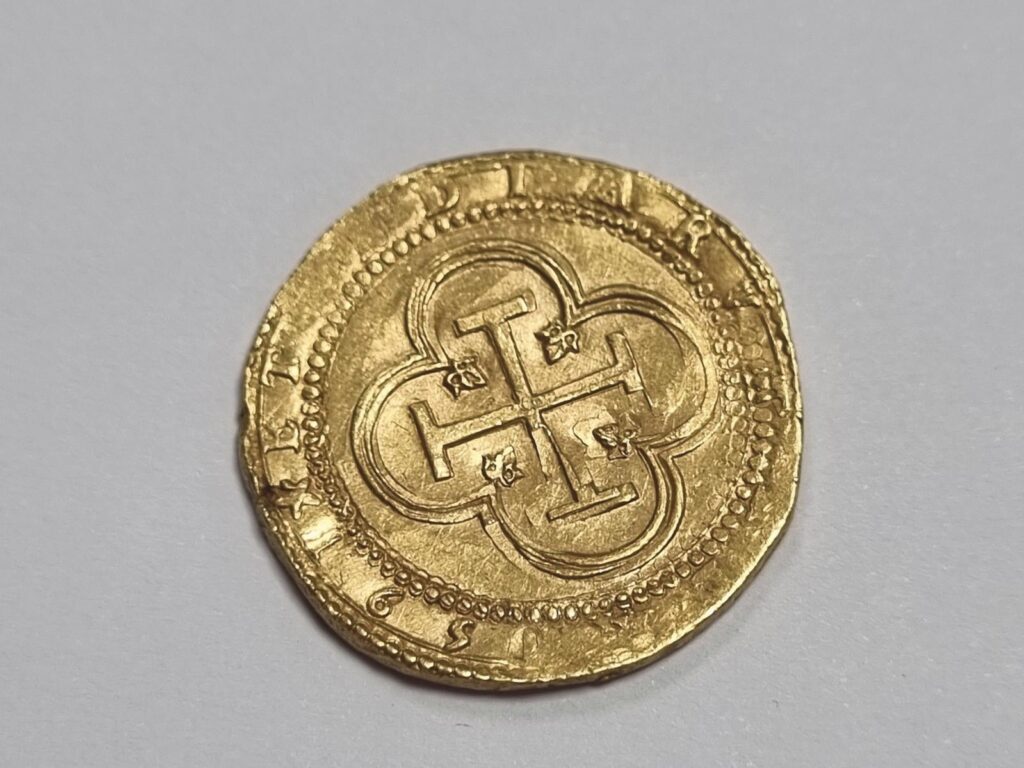
We do not know what the gold coin from the Powell Site looked like because the two collectors did not show it to John Powell. This image is included to provide the reader with what one type of Spanish 16th-Century gold coin looked like. We are still looking for the two collectors to obtain a photograph of it.
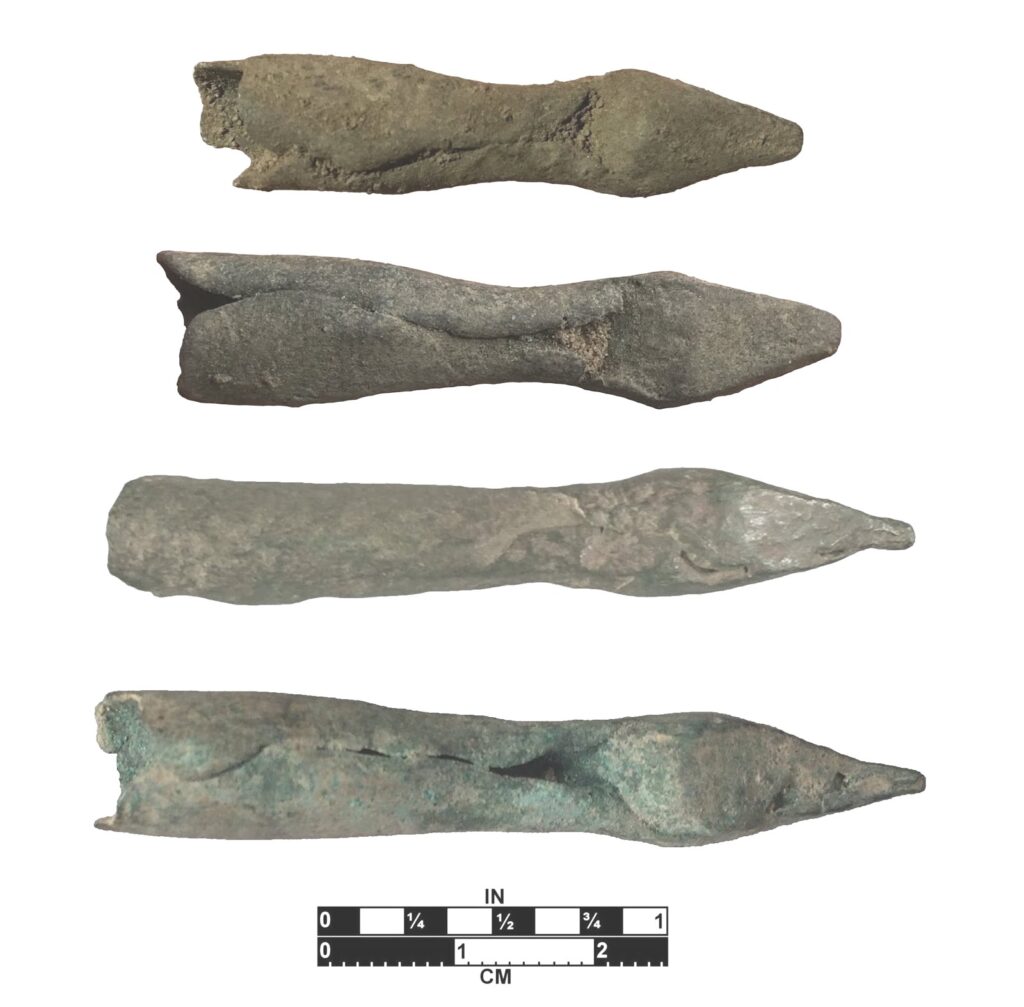
Upper: Public Domain 16th-Century Cross Bow projectile points from site 8Es1 in Florida. John Powell described two of these points to me from the Powell Site.
Lower: Public Domain 16th-Century Antique Spanish Cross Bow. Note projectile point.
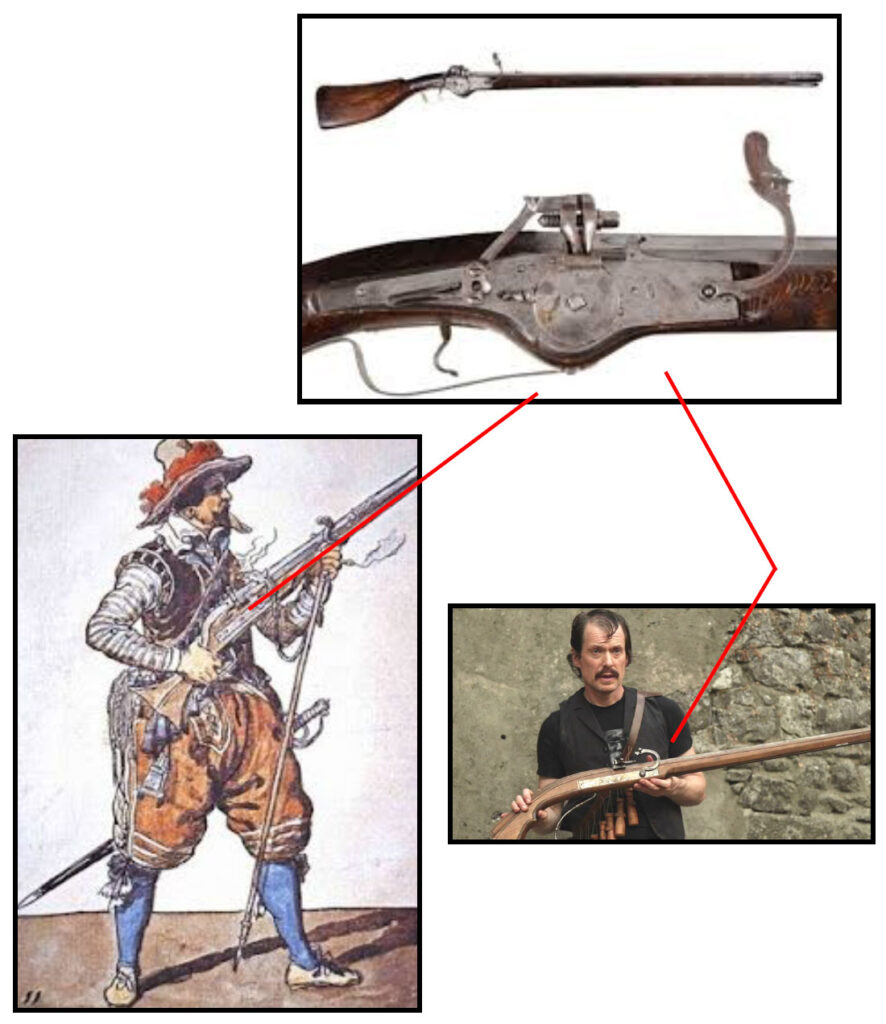
A Spanish matchlock gun from the 1500s was known as an harquebus or musket, a single-shot, muzzle-loading firearm that used a smoldering cord (match) to ignite the gunpowder (AI Public Domain). All three images are Public Domain from the Internet.
John Powell described several fragments of the remains of a matchlock gun shown to him from the Powell Site. He was certain that the fragments were from the matchlock portion of the gun.

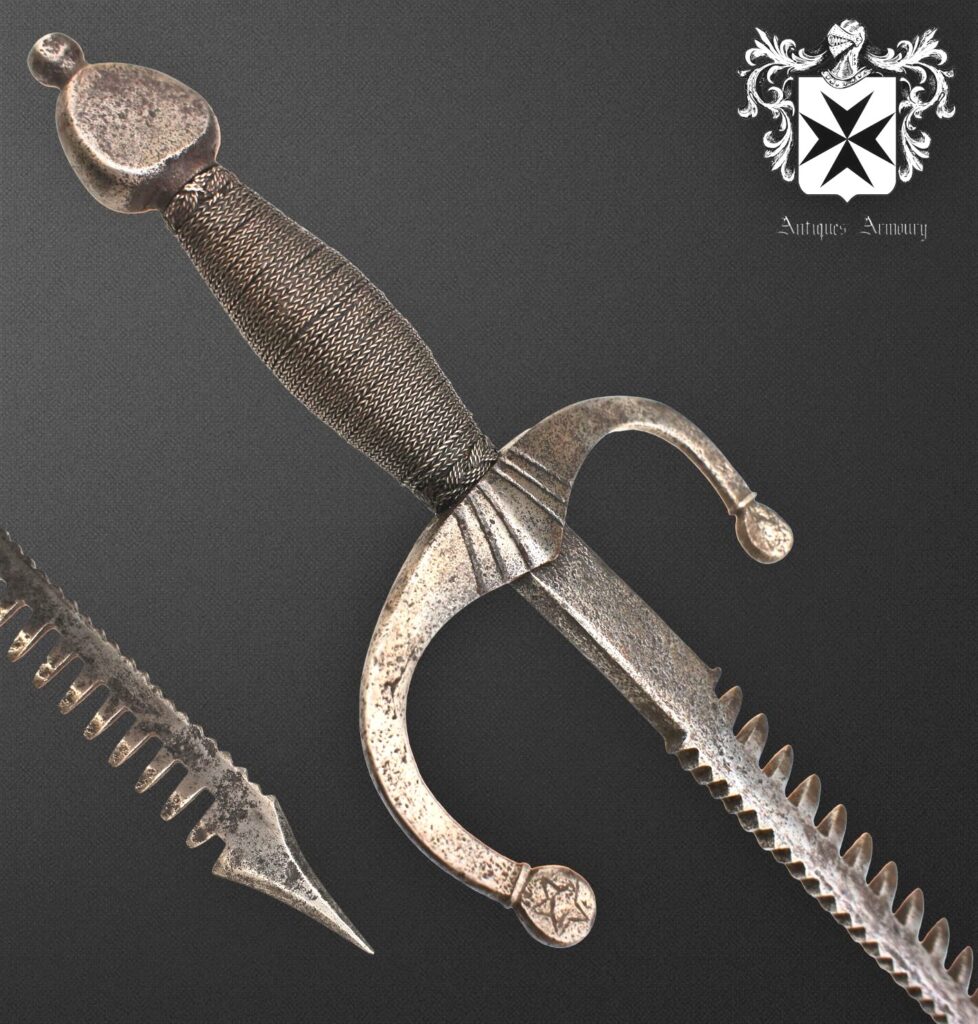
In the 1500s, Spanish steel daggers were highly regarded for their craftsmanship, especially those forged in Toledo, Spain. The most notable types from this period include the eared dagger, the parrying dagger and the navaja. Daggers were used for both combat and civilian purposes, with styles ranging from utilitarian to highly ornate (AI, Public Domain).
The dagger from the Powell Site was reported to be buried in a Native ceramic vessel, perhaps with Native remains.
Conclusions
We are fortunate to have recorded the information from John Powell concerning these artifactual and geographical clues to yet another Spanish/Native Contact site in the northern region of the Mobile Delta of southwest Alabama. The growing concentration of discoveries of Contact Period artifacts and sites in the region is certainly impressive and demands consideration relative to the Soto and Luna entradas into present day southwest Alabama and northwest Florida.